Best Soap Molds for Beginners (2026)
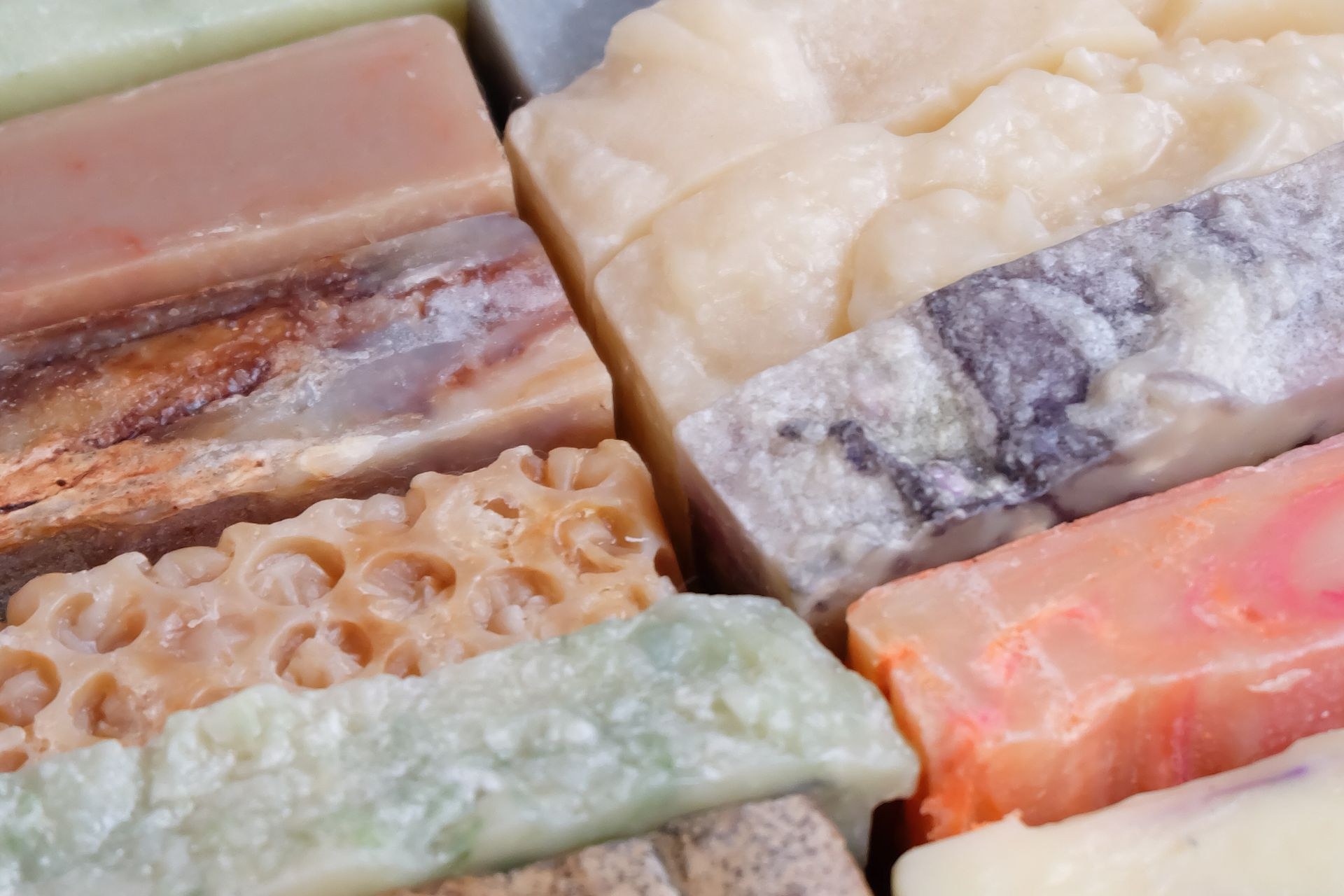
The mold decides more about your first bars than the recipe does. A good mold releases cleanly, holds its shape while the batter sets, and gives you the same bar size every single pour — which is what lets you price, wrap, and photograph a product instead of a happy accident. A bad mold bows out at the sides, sticks in the corners, or leaks batter across the counter, and every one of those failures shows up in the finished bar.
For beginners there are really two shapes to choose between. A loaf mold — a flexible silicone liner held square by a wooden box — makes one long loaf you slice into bars yourself, which is how most sellers work: swirls, layers, and textured tops all happen in a loaf, and you control the bar thickness with your cutter. A cavity mold makes individual bars in one pour with no cutting at all, which is faster and more forgiving, but every bar comes out the same plain rectangle. The six molds below cover both routes, from a roughly ten-dollar first loaf to a two-loaf kit with its own cutter box for a first product line. Every one works for melt-and-pour, and the loaf molds work for cold process and hot process too.
The short answer
- Best overall: Walfos Silicone Soap Mold, 42 oz ($14.99) — the complete first kit: silicone loaf liner, wooden box, and both a straight scraper and a wavy cutter in the box. Check price on Amazon →
- Best budget loaf: DD-life Flexible Rectangular Soap Mold, 42 oz (~$10) — just the liner and the wooden box, nothing extra, and the cheapest honest way into loaf soap. Check price on Amazon →
- Best simple loaf: Ogrmar Flexible Rectangular Soap Mold, 42 oz — the long-running plain loaf-and-box set, rated from -40°F to 446°F for soap, baking, and freezing. Check price on Amazon →
- Best cavity mold, no cutting: SJ Silicone Soap Molds, 3 pack (~$9) — three 6-cavity trays, 18 bars per pour, each bar finished the moment it pops out. Check price on Amazon →
- Best in pink, with cutters: Lerykin Rectangular Soap Mold, 42 oz — a pink liner in a dovetail-jointed wooden box, with straight and wavy stainless cutters included. Check price on Amazon →
- Best two-loaf kit: ZOENHOU 7PCS Soap Molds Kit, 42 oz x 2 — two loaf molds (purple and pink), a guided wooden cutter box, and both slicers, for pouring two recipes at once. Check price on Amazon →
Walfos Silicone Soap Mold, 42 oz — the best first kit
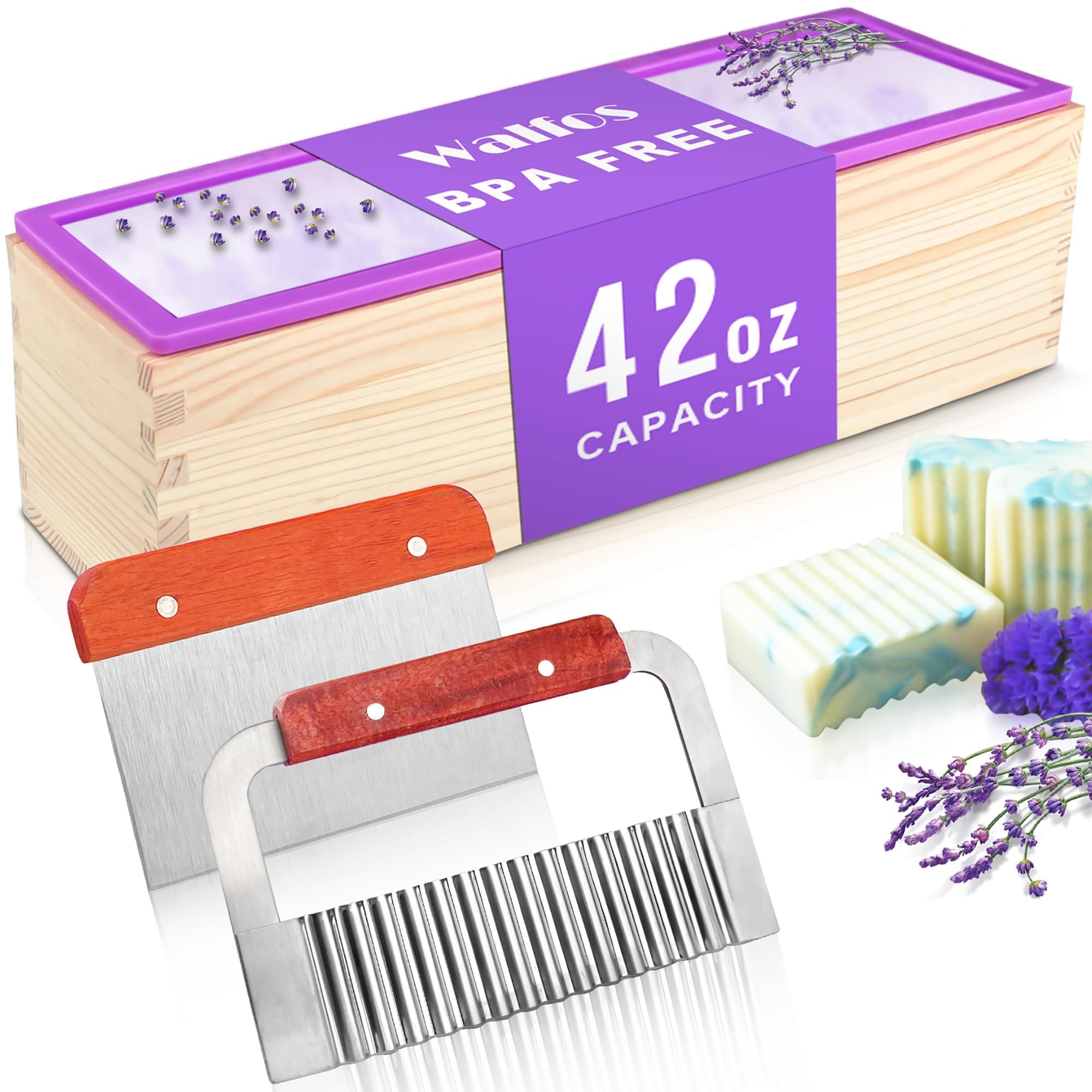
If you buy one mold first, buy the one that also solves cutting. The Walfos set pairs the standard beginner loaf — a flexible, BPA-free silicone liner of about 10 x 3 x 2.7 inches, held in a wooden box, 42 oz capacity — with the two tools every loaf maker needs on day two: a straight stainless scraper and a wavy cutter, both with wooden handles. That matters because a loaf is only half the job; slicing it evenly is the other half, and a wavy cutter turns a plain bar into the ridged, giftable bar buyers recognise. The liner is food-grade silicone, so the same mold doubles for baking and ice work between soap batches. At $14.99 the whole set costs about what the cutters alone sell for elsewhere, which is why it is the default recommendation for a first pour.
Honest pros:
- Complete set — mold, wooden box, straight scraper, and wavy cutter in one purchase
- 42 oz loaf cuts into roughly 8–10 standard bars, the right size for a first recipe
- BPA-free food-grade silicone — releases cleanly and doubles for baking
- Wooden box keeps the flexible liner square, so bars come out straight-sided
Honest cons:
- Freehand cutting still varies — a guided cutter box (see the ZOENHOU kit) is the upgrade for perfectly even bars
- One loaf at a time — two recipes means two pours, or the two-mold kit below
- The liner is flexible by design — fill it inside the box, never carry it full on its own
DD-life Flexible Rectangular Soap Mold, 42 oz — the budget loaf
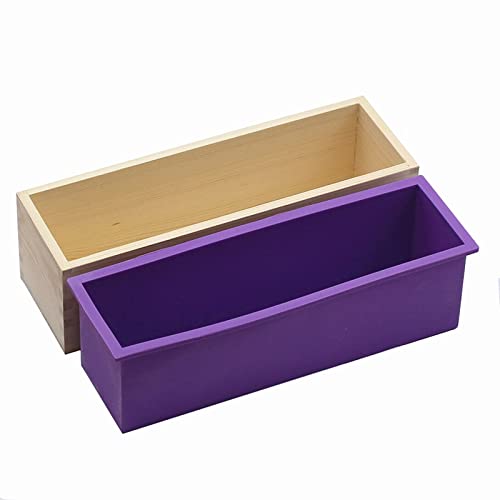
The DD-life is the mold stripped to its essentials: one purple silicone liner and one wooden box, 11 x 3.5 x 3.1 inches overall, 42 oz of batter. It has been the budget loaf on Amazon for years because there is nothing in it to go wrong — no cutters to bend, no extras to lose — and at around $10 it is the cheapest way to find out whether loaf soap is for you. It handles melt-and-pour, cold process, and hot process, and the liner peels away from a set loaf without lining paper or release spray, which is the entire reason silicone replaced bare wood for beginners. What you give up for the price is the cutting gear: you will slice with a kitchen knife or bench scraper you already own, and your first bars will vary in thickness until you add a cutter. As a first mold that is a fair trade — spend the savings on soap base and fragrance, and upgrade the cutting, not the mold, later.
Honest pros:
- Around $10 — the cheapest complete loaf-and-box set worth buying
- Simple and proven — one liner, one box, nothing to assemble
- Silicone release — no lining paper, no greasing, easy wash-up
- Same 42 oz size as the kits, so standard beginner recipes fit it exactly
Honest cons:
- No cutters included — even bars need a tool you supply yourself
- Plain finish — the box is functional, not gift-box pretty
- Like every flexible liner, it must stay in its box while the batter sets
Ogrmar Flexible Rectangular Soap Mold, 42 oz — the simple standard
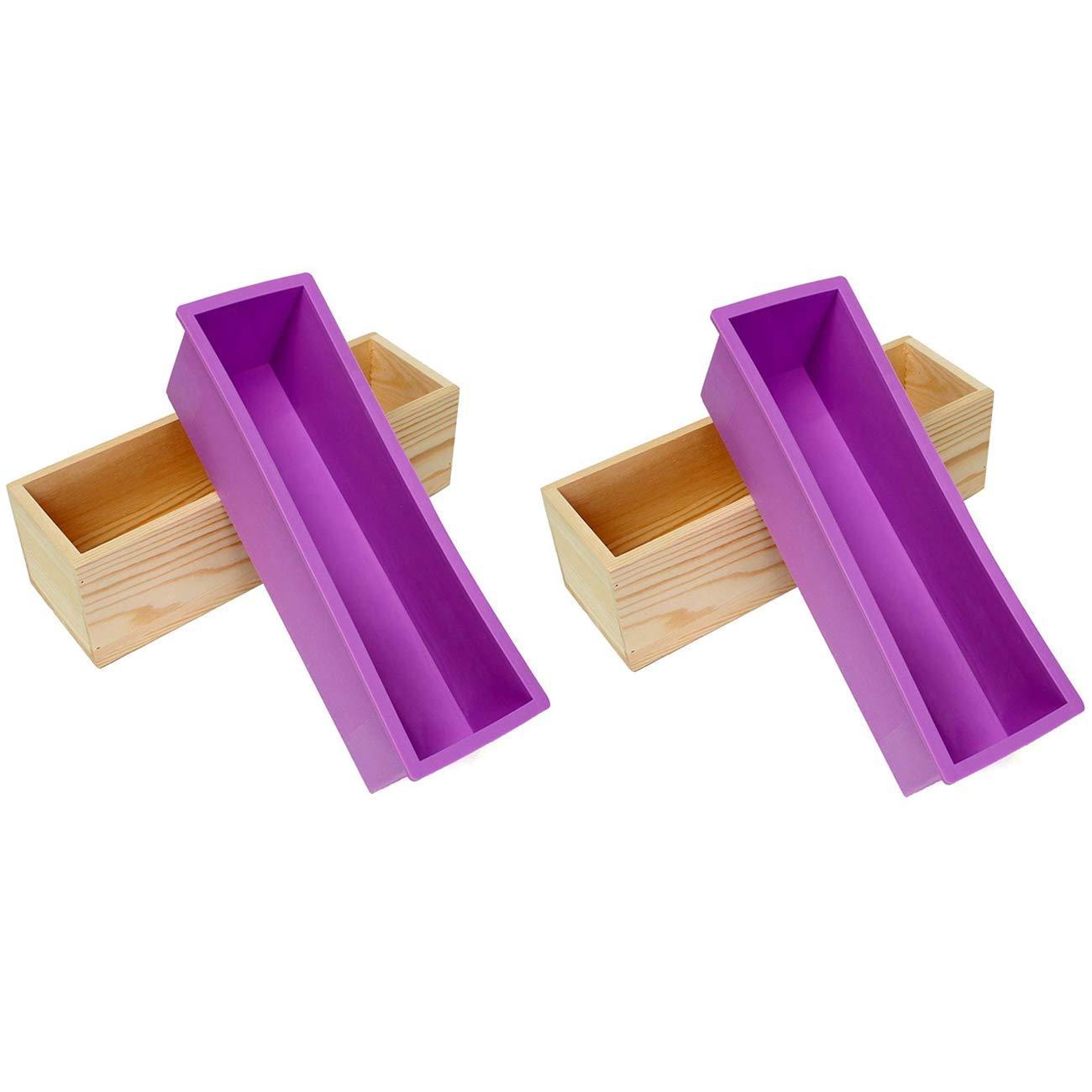
Ogrmar's loaf is the other long-running version of the same idea: a purple silicone liner of 10 x 3 x 2.7 inches in an 11 x 3.5 x 3.2 inch wooden box, making about 1.2 kg of soap per pour. Its listing spells out the temperature range plainly — -40°F to 446°F (-40°C to 230°C) — which is the spec that makes a silicone mold genuinely multi-purpose: cold process and hot process soap, the freezer for melt-and-pour setups, and the oven for baking between soap projects. The wooden box and liner separate easily for unmolding and washing, and the design has barely changed in years, which for a tool you will use weekly is a feature, not a flaw. Choose it over the DD-life if the wider temperature rating matters to you, or if you are already set for cutters; choose the Walfos if you want the cutters in the same box.
Honest pros:
- Stated -40°F to 446°F range — soap, baking, and freezing in one mold
- About 1.2 kg of soap per pour — a full small batch, not a sample size
- Liner and box separate easily for unmolding and cleaning
- A settled, long-sold design with a deep base of maker experience
Honest cons:
- Mold and box only — no cutters, no extras
- One general-purpose size — very tall or wide bar styles need a different mold
- Purple is the colour — no options if your bench aesthetic matters to you
SJ Silicone Soap Molds, 3 pack — the no-cutting route
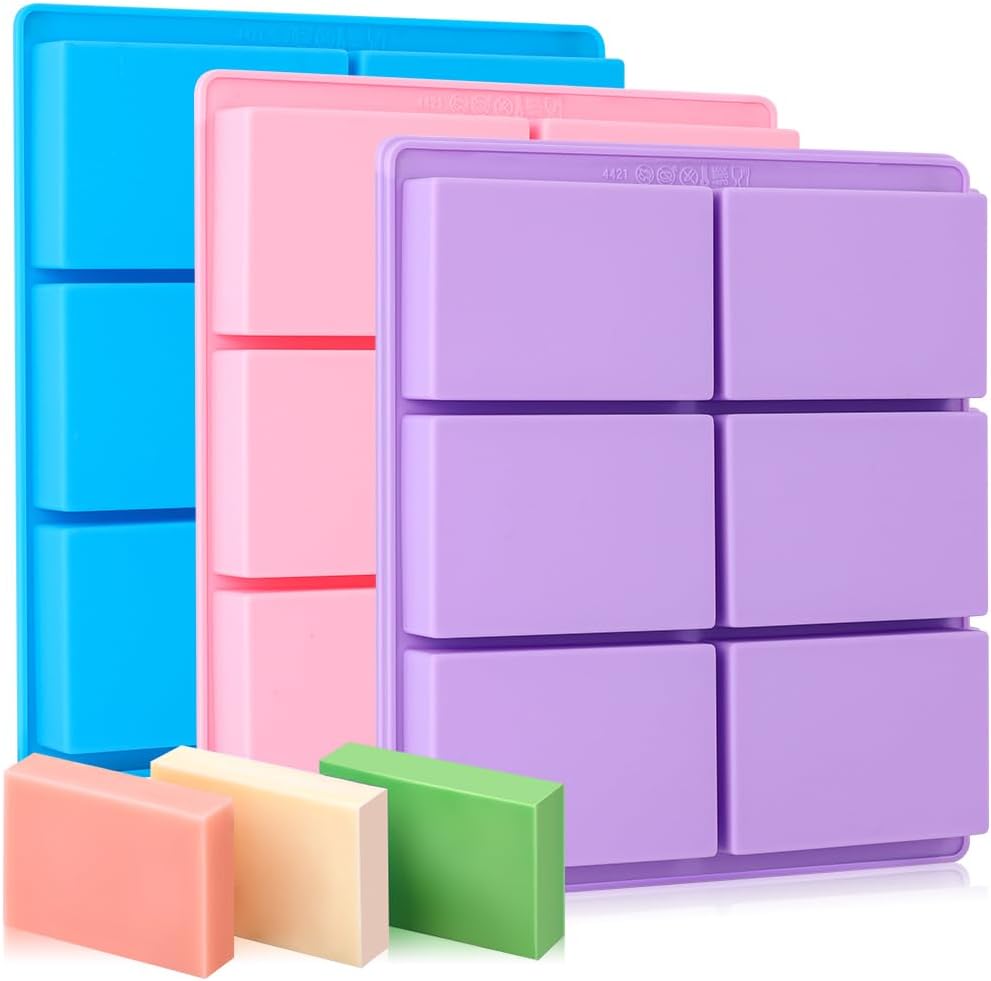
Not every beginner should start with a loaf. Cavity molds skip the two hardest beginner skills — swirling a loaf and slicing it straight — entirely: pour into the cavities, wait, pop out finished bars. The SJ set gives you three trays (blue, purple, and pink) with six rectangular cavities each, so one pour of base fills up to 18 bars at once, and every bar is the same size and weight, which makes wrapping, pricing, and photographing them trivially consistent. It is the natural mold for melt-and-pour beginners, for test batches of a new fragrance (one cavity per scent), and for kids' and guest-soap sizes. The honest limits are creative ones: no swirls through a loaf, no textured tops, and bars that look like every other cavity bar. Most sellers who start here add a loaf mold within a few months — but they keep these trays for samples, embeds, and small bars, which is why a roughly $9 three-pack earns its drawer space.
Honest pros:
- 18 bars per pour across three trays — real small-batch volume
- No cutting at all — bars are finished when they pop out
- Perfect for testing — one cavity per fragrance, colour, or additive
- Around $9 for the three-pack — the cheapest cost per bar here
Honest cons:
- Plain rectangles only — no swirls, layers, or textured tops
- Smaller bars than a sliced loaf — position them as guest, sample, or travel size
- Thin trays flex when full — carry them on a baking sheet, not by the edges
Lerykin Rectangular Soap Mold, 42 oz — the pink pick with cutters
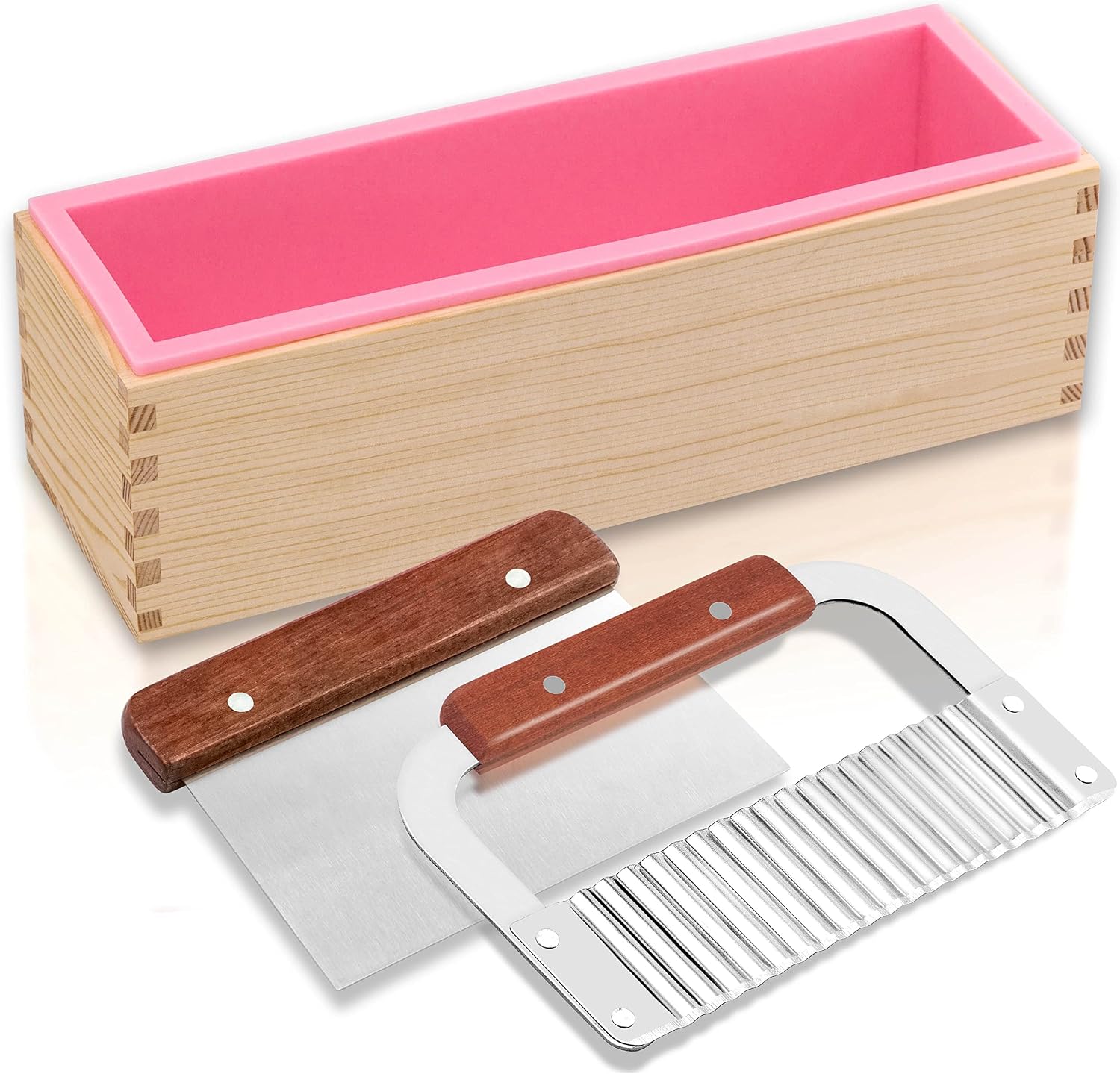
Lerykin's kit is the Walfos formula in pink: a 42 oz silicone liner (about 10.75 x 3.3 x 2.95 inches) in a wooden box with dovetail-style corner joints, plus the straight and wavy stainless cutters with wooden handles. The BPA-free silicone is rated from -40°F to 446°F, so cold process, hot process, and melt-and-pour are all in bounds, and the non-stick liner releases a set loaf without lining. The wavy cutter is 7.3 x 4.3 inches and the straight cutter 5.9 x 4.3 inches — full loaf width, so one press cuts a clean bar instead of sawing. If you are choosing between this and the Walfos, the honest answer is that they do the same job; pick on colour, on which is in stock, and on the day's price. If you are choosing between this and a mold-only set, the cutters are the difference — they are what make your tenth bar match your first.
Honest pros:
- Mold, box, and both cutters — the complete loaf workflow in one kit
- Dovetail-jointed wooden box feels sturdier than plain butt joints
- -40°F to 446°F silicone — every soap method, plus baking
- Full-width cutters — one clean press per bar, straight or wavy
Honest cons:
- Overlaps the Walfos almost exactly — no reason to own both
- Freehand cutting still takes practice to keep perfectly even
- Pink liner shows dark colourants and clays more than purple does
ZOENHOU 7PCS Soap Molds Kit, 42 oz x 2 — the two-loaf step up
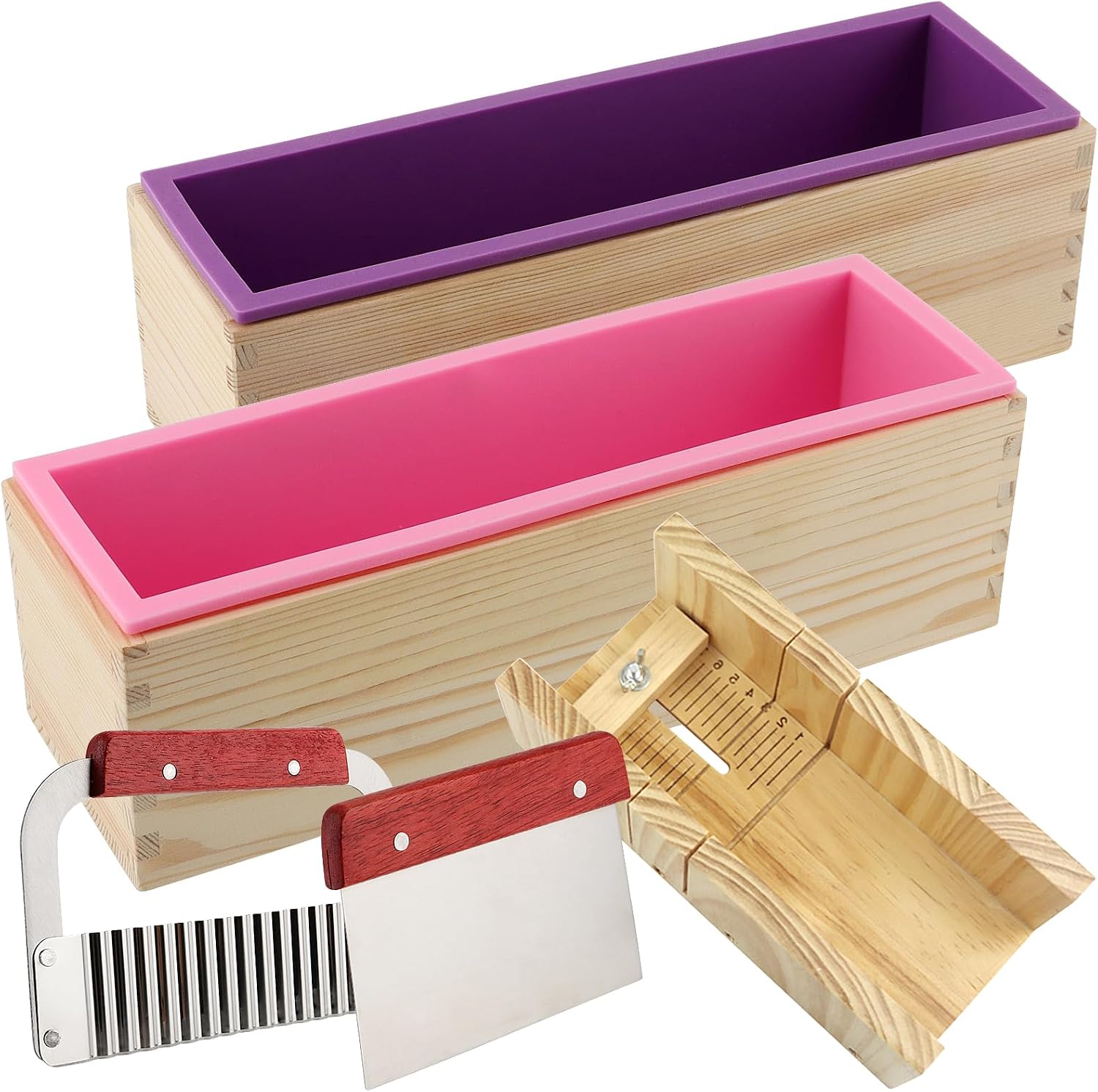
When one loaf stops being enough — two fragrances for a market day, a plain batch and an experiment — the ZOENHOU kit is the natural step up. You get two complete 42 oz loaf molds, one purple and one pink, each in its own wooden box, plus the piece the single kits lack: a wooden cutter box with measurement markings that guides the blade, so bars come out at a repeatable thickness instead of eyeballed. Both slicers are included, straight and wavy. Seven pieces in total, and the colour-coding is quietly practical: purple for one recipe, pink for another, no labels needed while both loaves cure. The per-mold cost lands close to the single kits once you count the cutter box, which bought separately costs nearly as much as a mold. This is the kit to buy if you already know soap is sticking — a hobby becoming a first product line — rather than the kit to test the idea with.
Honest pros:
- Two full loaves at once — two recipes, or double volume of one
- Guided cutter box with measurements — repeatable bar thickness
- Both slicers included — straight and wavy finishes
- Colour-coded liners keep simultaneous batches straight
Honest cons:
- The most expensive way in here — buy it when you know you will use both molds
- Takes real storage space — two boxes plus a cutter box
- Still 42 oz loaves — a true production line will outgrow it to larger slab molds
Side-by-side
| Walfos Loaf Kit | DD-life Loaf | Ogrmar Loaf | SJ 3-Pack Cavity | Lerykin Loaf Kit | ZOENHOU 7PCS Kit | |
|---|---|---|---|---|---|---|
| Typical price | $14.99 | ~$10 | Check latest price | ~$9 / 3 trays | Check latest price | Check latest price |
| Mold type | Loaf + box | Loaf + box | Loaf + box | 6-cavity trays x 3 | Loaf + box | 2 loaves + boxes |
| Capacity | 42 oz | 42 oz | 42 oz (~1.2 kg) | 18 bars per pour | 42 oz | 42 oz x 2 |
| Cutters included | Straight + wavy | No | No | None needed | Straight + wavy | Straight + wavy + cutter box |
| Best for | First complete kit | Tightest budget | Simple, proven loaf | No-cut bars & testing | Kit in pink | Two batches at once |
How to choose
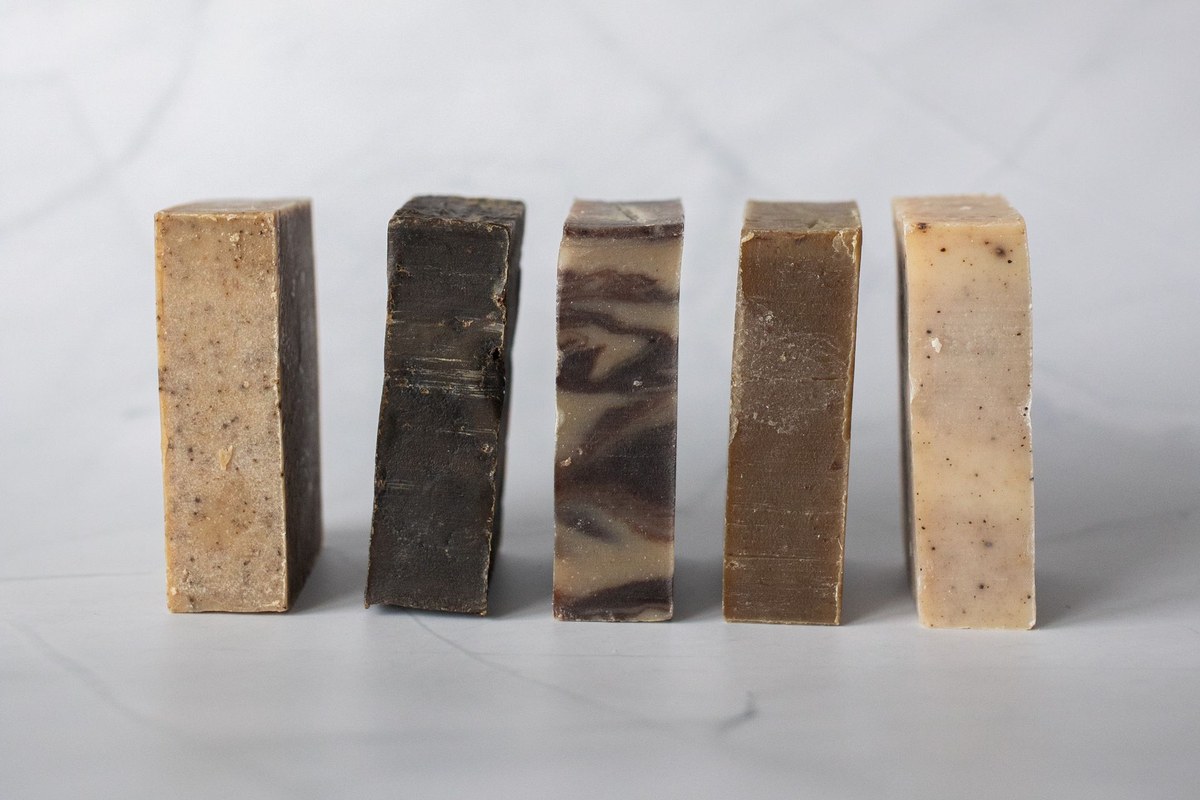
Loaf or cavity is the real decision. A loaf teaches you the seller's skills — pouring at trace, swirling, texturing the top, slicing — and produces the bars buyers recognise from craft markets. A cavity mold produces finished bars with none of that, faster and more consistently, in one plain shape. Beginners who want to sell should start with a loaf; beginners who want soap for gifts, guests, and testing recipes can start with cavities and add a loaf later. Many benches end up with both, in that order.
Respect the 42 oz standard. Almost every beginner recipe, soap calculator default, and melt-and-pour block is sized around a 42 oz (roughly 2.5 lb) loaf, which slices into about 8–10 bars at one inch thick. Every loaf above is that size on purpose: your first recipes will fit without rescaling maths. Bigger molds sound efficient and mostly teach you that a failed big batch costs more than a failed small one.
Always pour the liner inside its box. A full silicone liner is a water balloon with corners — it bows, and bowed sides set into bowed bars. The wooden box is not packaging; it is the mold's skeleton. Fill, insulate, and move the loaf in the box, and peel the liner away only after the soap has set — 24 hours for melt-and-pour and hot process, 24–48 hours for cold process before unmolding, then slice and cure cold process bars for 4–6 weeks.
Do the per-bar maths. A $10–15 mold is a one-time cost spread over hundreds of bars; even the two-loaf kit pays for itself the first time a guided cutter turns a whole loaf into sellable, same-size bars instead of seconds. The expensive mold is the one that sticks, leaks, or bows — which is why every pick here is a silicone liner in a wooden box rather than a bare tray or a rigid plastic mold. New to the full process? Our soap making kits guide covers complete starter sets with base and fragrance included, and our resin kits guide and candle wax guide cover the neighbouring crafts sellers pair with soap.
FAQ
Can I use the same mold for melt-and-pour and cold process?
Yes — every mold here is silicone, which does not react with lye, and the loaf molds are rated to 446°F where a range is stated, well past hot process temperatures. Wash the liner well between methods so fragrance and colour do not carry over.
Why does my loaf have bowed, bulging sides?
The liner was filled outside its wooden box, or the box is a loose fit. Silicone flexes under the weight of batter. Always set the liner in the box before pouring, and if an older liner has stretched, a towel wrapped around the box during the set keeps the walls straight.
How many bars does a 42 oz loaf make?
About 8–10 bars, depending on thickness: sliced at one inch, a standard 10-inch loaf gives ten bars before the end pieces; at a chunkier 1.25 inches, eight. Weigh one bar from your first loaf and you can price the whole batch from it.
Do I need to line or grease a silicone mold?
No. That is the point of silicone — a set loaf releases by peeling the liner away, and a cavity bar pops out with a flex and a push. If a cold process loaf feels soft at 24 hours, give it another day rather than forcing it; soft soap tears, patient soap releases cleanly.
When should I move from cavity molds to a loaf?
When you want swirls, layers, or a signature bar shape of your own — or when buyers start asking what else you make. The cavity trays stay useful afterwards for samples, embeds, and travel bars, so the upgrade replaces nothing.