
Best Heat Sealers for Packaging (2026)
A heat sealer is the difference between packaging that looks homemade and packaging that looks like it came from a real brand. If you sell anything that goes into a poly bag, a Mylar pouch, or shrink wrap — candles, bath and body products, baked goods, coffee, prints, small apparel, craft kits — a clean heat seal keeps the product fresh, keeps dust and moisture out, stops casual tampering, and survives being opened and resealed by nobody, because it cannot be resealed without a machine. Tape peels, fold-over flaps gape, and self-seal strips fail on textured bags. A two-second press on an impulse sealer does not. For sellers, it is also a speed tool: once the temperature dial is set for your bag, every seal takes the same two seconds, bag after bag, with no warm-up and no technique to learn.
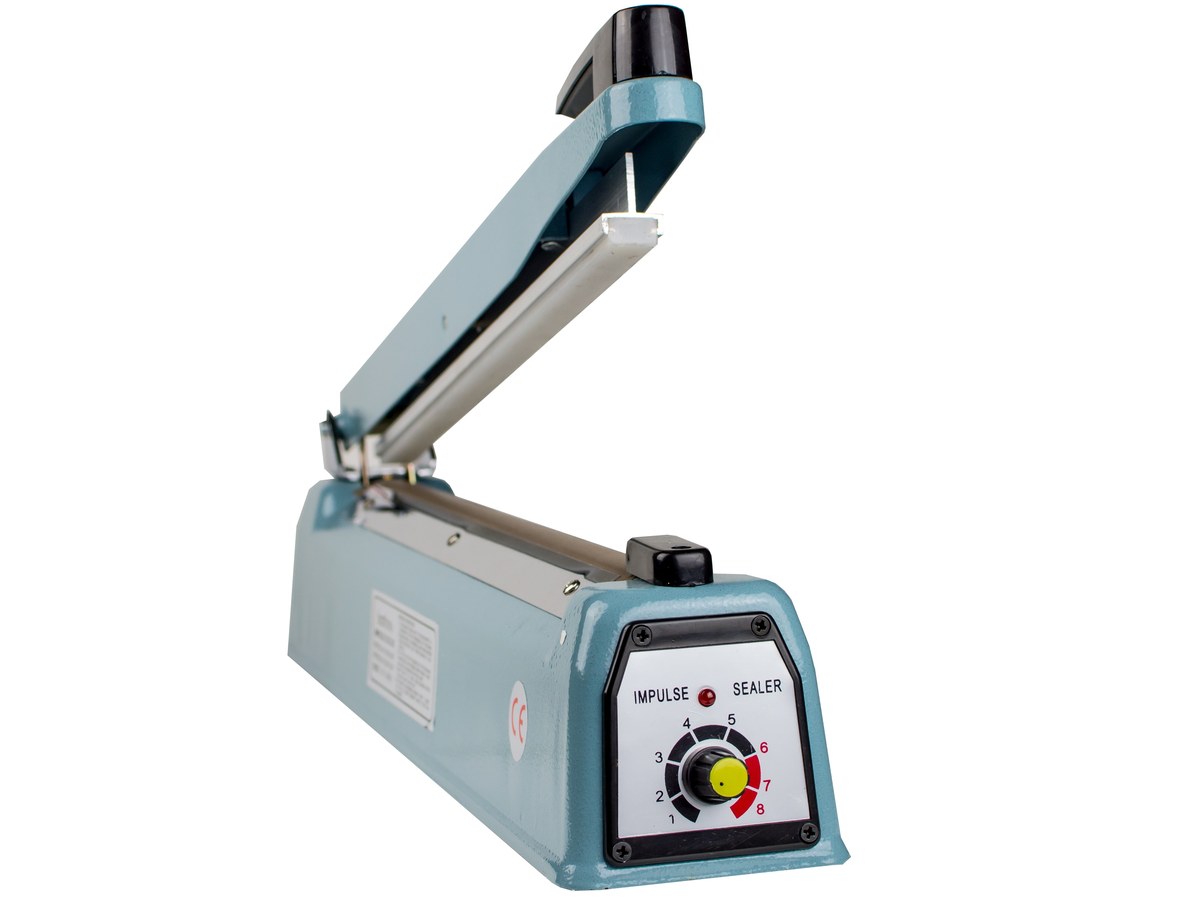
Almost every machine a small seller needs is an impulse sealer: a tabletop arm you press down, which heats a thin element only while the arm is closed — that is the "impulse" — then goes cold the moment you lift it. They seal PE and PP poly bags, Mylar and foil pouches, cellophane, and shrink film, and they come in 8, 12, and 16 inch seal lengths with a standard 2mm seal width. Two upgrades matter beyond size. A wide-seal machine like the LinsnField Sealer Pro lays down a 7mm seal that holds better on thick Mylar and long-term storage bags. And when hand-pressing becomes the bottleneck, a continuous band sealer like the VEVOR FR900K feeds bags through on a conveyor and seals them as fast as you can load them. The six picks below cover that whole ladder, from a ~$30 first machine to a small production line.
The short answer
- Best overall: METRONIC Impulse Sealer 8 inch (~$30) — the iron-body starter most sellers begin with: 300W, an adjustable dial, seals up to 10 mil, and a repair kit with spare elements in the box. Check price on Amazon →
- Best budget: runruii Impulse Sealer 12 inch — a full 12 inch seal bar, 350W, and eight temperature settings for less than the brand-name 8 inch machines, with a spare element included. Check price on Amazon →
- Best mid-size: METRONIC Impulse Sealer 12 inch — the same proven iron design stepped up to the 12 inch size that fits most product pouches, at 400W. Check price on Amazon →
- Best heavy-duty: LinsnField Sealer Pro 12 inch — a 7mm wide seal instead of the standard 2mm, an aluminium body that cannot rust, a copper transformer, and two replacement kits plus a spare fuse included. Check price on Amazon →
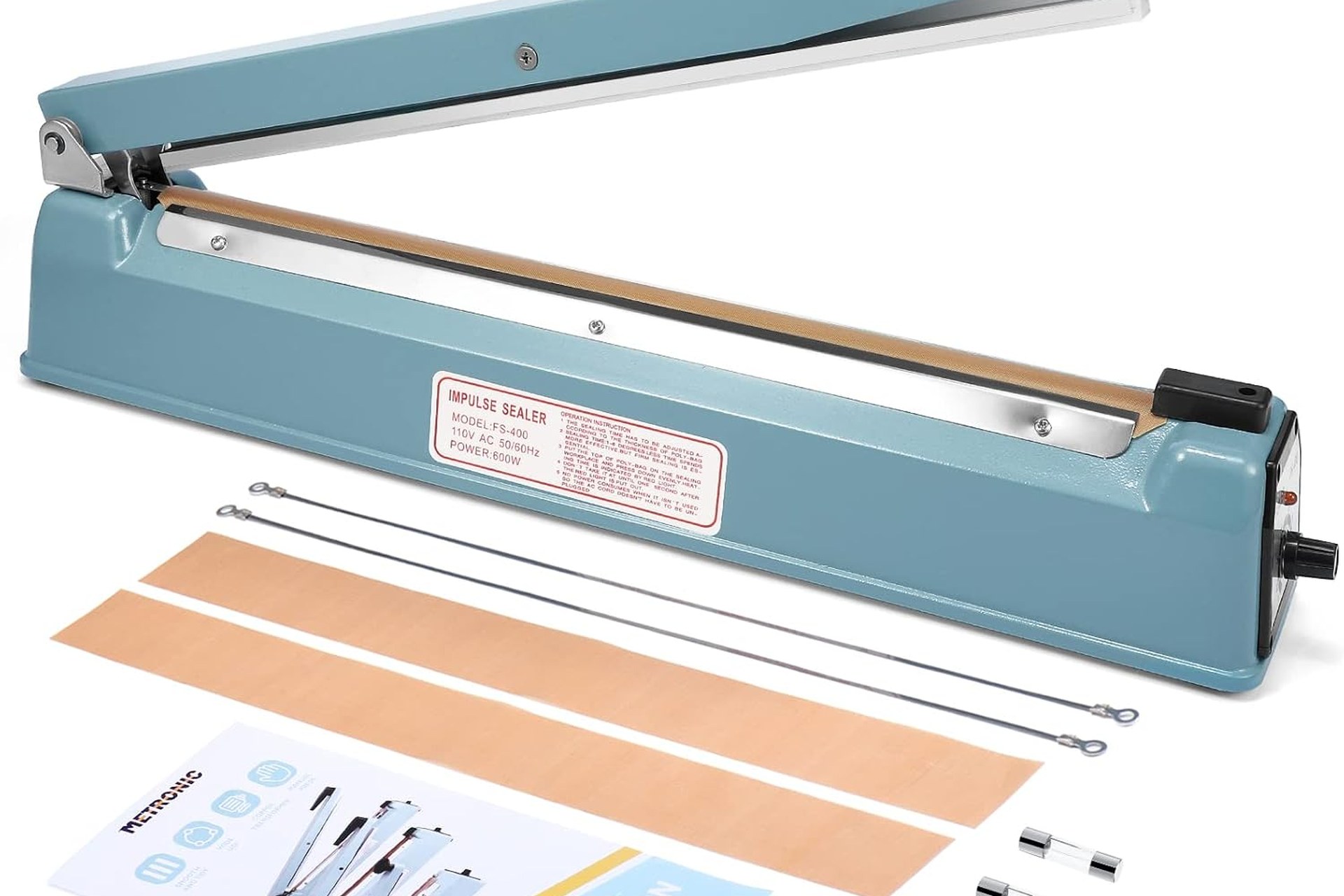
- Best for wide bags: METRONIC Impulse Sealer 16 inch — a 16 inch, 600W bar for big pouches, bulk bags, and shrink-wrapping larger products in one press. Check price on Amazon →
- Best for high volume: VEVOR FR900K Continuous Band Sealer — bags ride a conveyor through heated bands at up to 16 metres a minute, with digital temperature control and a date-printing wheel. Check price on Amazon →
METRONIC Impulse Sealer 8 inch — the best overall
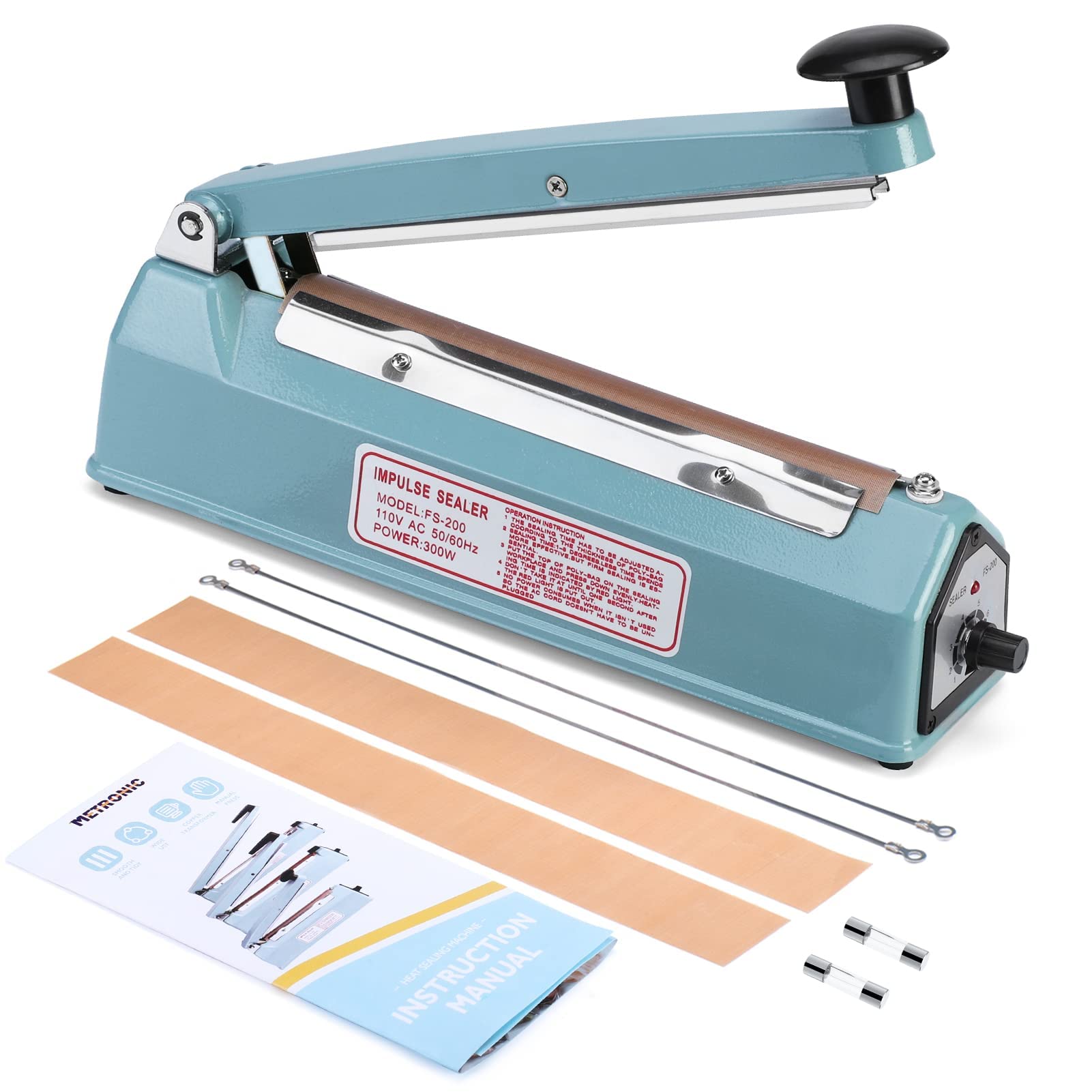
The 8 inch METRONIC (model FS-200) is the machine most small sellers start with, and the one most packing stations still run years later. It is a 300W impulse sealer in an iron body with an adjustable temperature dial, a 2mm seal width, and a rated maximum bag thickness of 10 mil — enough for standard poly bags, cellophane, Mylar pouches, and shrink film. Sealing is instant: lay the bag across the bar, press the arm, hold until the indicator light goes out, done. There is no warm-up because the element only heats during the press. Two details make it a better buy than the anonymous clones at the same price: the box includes a repair kit with two spare heating elements and spare Teflon strips, so the one part that eventually wears out is a five-minute swap instead of a new machine, and the iron body stays planted on the bench instead of skating around when you press one-handed. The 8 inch bar is the honest limit: it seals bags up to about 8 inches wide, which covers most pouches, small product bags, and cookie and candle packaging — and if your bags are wider, that is what the 12 and 16 inch picks below are for.
Honest pros:
- Around $30 — the cheapest way to get professional, tamper-evident seals
- Iron body stays put on the bench; the dial covers thin cello to thick Mylar
- Repair kit included: two spare elements and Teflon strips in the box
- No warm-up, no learning curve — the light tells you when the seal is done
Honest cons:
- 8 inch bar only — wider pouches need two overlapping presses or a bigger machine
- Standard 2mm seal — fine for retail bags, light for heavy long-term storage pouches
- It seals; it does not cut — trimming shrink film still takes scissors or a cutter model
runruii Impulse Sealer 12 inch — the best budget
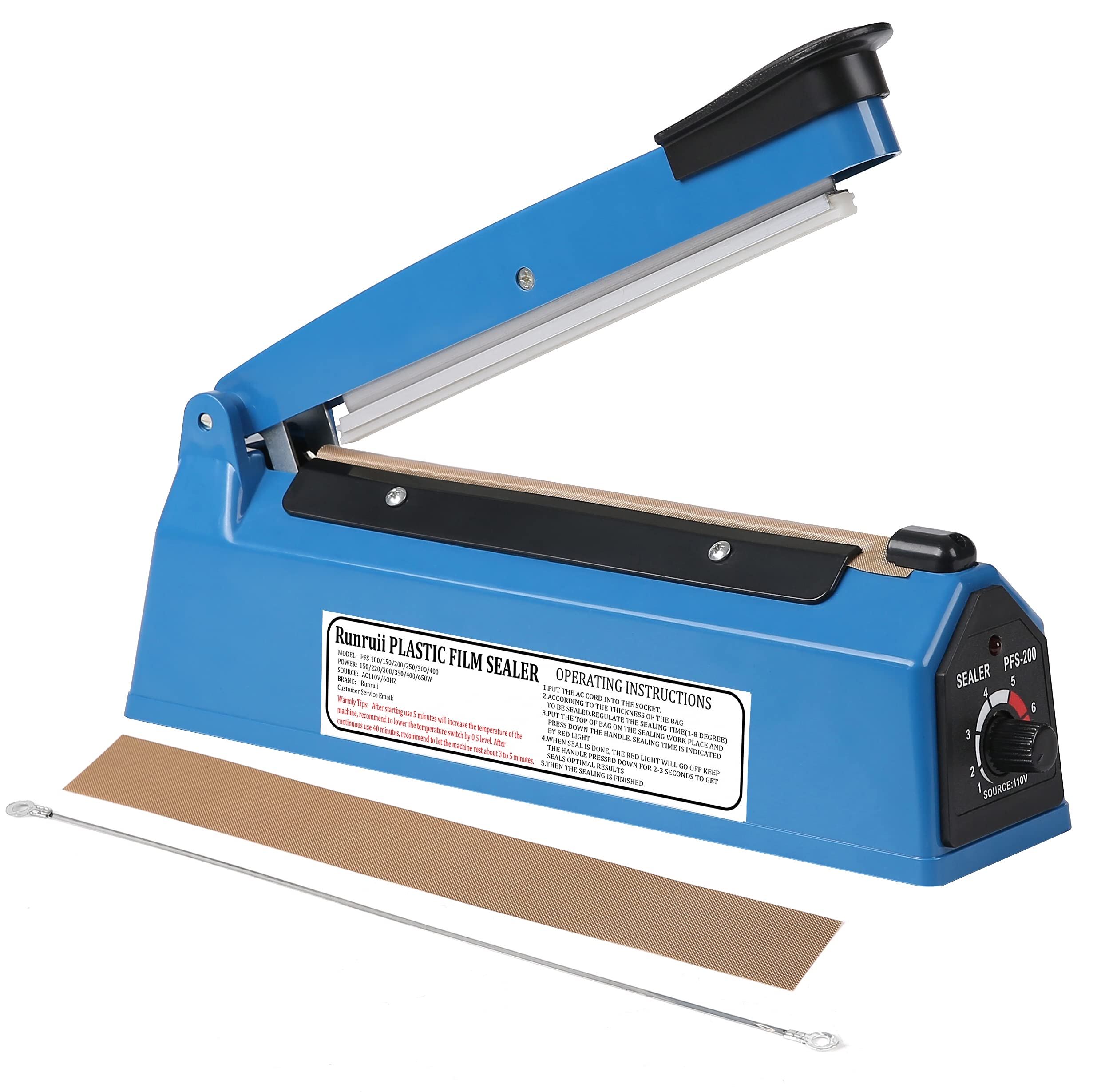
The runruii 12 inch is the value play in this category: a full-size 12 inch seal bar and 350W of impulse power for less money than the brand-name 8 inch machines. It is one of the best-selling sealers in Amazon's Commercial Bag Sealers category, and the formula is simple — eight temperature settings on the dial, a seal that takes about two seconds, compatibility with PE and PP bags up to roughly 10 mil, and a spare heating element included in the box. The body is a lighter build than the METRONIC iron machines, which cuts both ways: it is easier to move between packing stations and store in a cupboard, and it feels less planted during a long run of pressing. The dial numbers also run as a guide rather than a precise temperature — every impulse sealer works this way, and the practical method is the same on all of them: seal a test bag, tug it, and nudge the dial up until the seal holds without melting through. If your budget is the deciding factor and your bags are standard retail pouches, this is the most sealing width per dollar on this page.
Honest pros:
- 12 inch seal bar at an 8 inch price — the best width-per-dollar here
- Eight temperature settings cover thin poly through thicker Mylar
- Spare heating element included, so the wear part is covered from day one
- Light body is easy to store and move between workspaces
Honest cons:
- Lighter body can shift on the bench during one-handed pressing
- Dial settings are a guide, not exact temperatures — expect a few test bags
- Finish and fittings are budget-grade next to the iron METRONIC machines
METRONIC Impulse Sealer 12 inch — the best mid-size
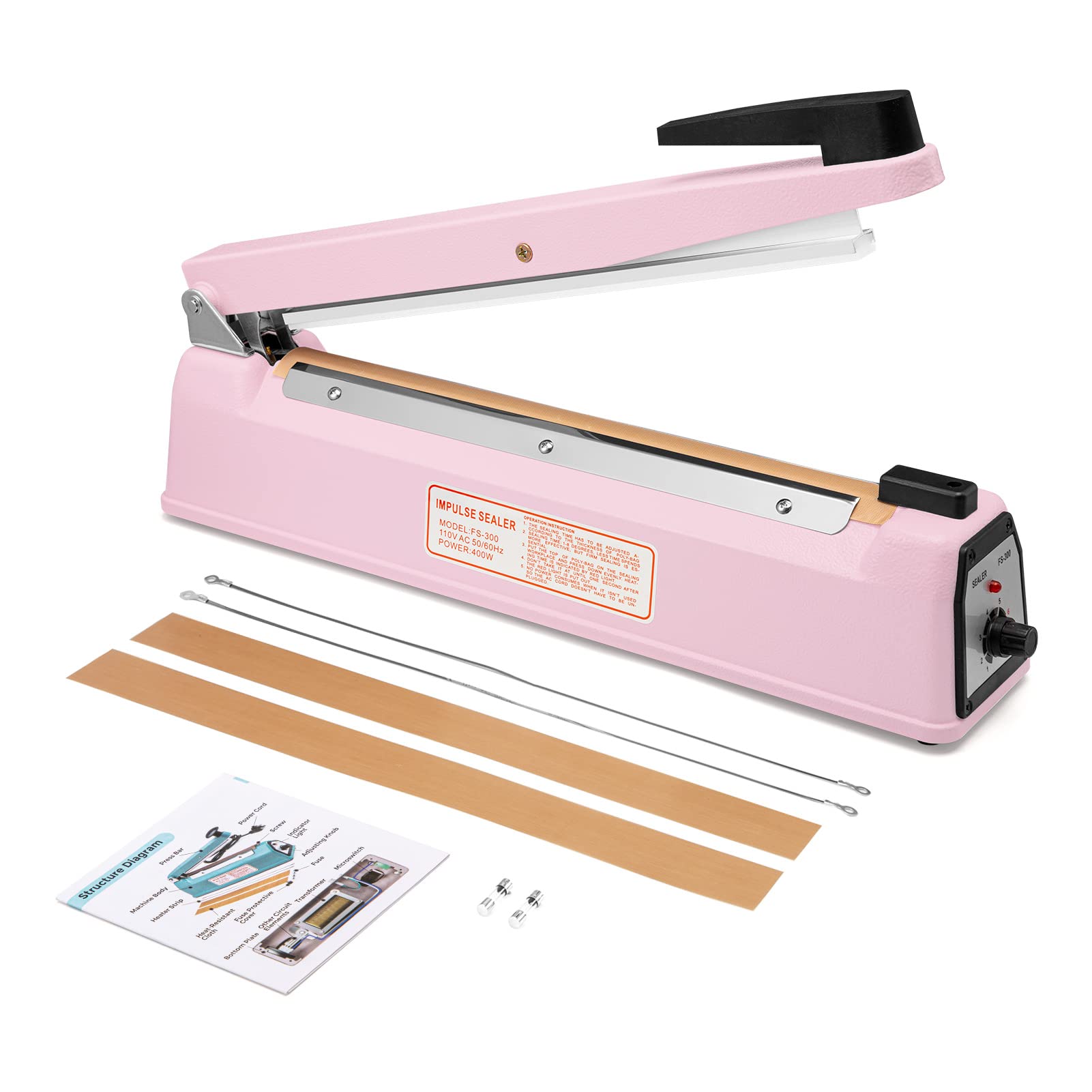
Twelve inches is the size most sellers actually need, and this is the METRONIC formula at that size: model FS-300, 400W, the same iron body, adjustable dial, and 2mm seal as the 8 inch, with a repair kit of spare elements and Teflon strips included. The extra four inches over the starter size is worth more than it sounds. A 12 inch bar seals the standard 8 x 12 and 10 x 13 inch pouches in one press instead of two, takes wider Mylar bags for candles, bath products, and food items, and gives you room to angle a bag when the product inside is an awkward shape. It also future-proofs the purchase: sellers rarely shrink their packaging, and the 12 inch machine is the one that does not get replaced when a product line grows. The listing shown here is the pink colourway; the same machine is sold in other colours, so check the colour on the listing before ordering if your packing station has a look to maintain. Everything said about the 8 inch applies — instant seals, no warm-up, a wear part you can replace yourself — just sized for the bags most product sellers actually buy.
Honest pros:
- The 12 inch bar seals most standard product pouches in a single press
- 400W iron-body build with the same spare-element repair kit included
- Adjustable dial handles PE, PP, Mylar, foil, and cellophane bags
- The size sellers graduate to — buying it first skips the upgrade
Honest cons:
- Costs more than the 8 inch for the same 2mm seal width
- Bigger footprint on a small packing bench than the 8 inch
- Colour varies by listing — confirm you are ordering the one you want
LinsnField Sealer Pro 12 inch — the best heavy-duty
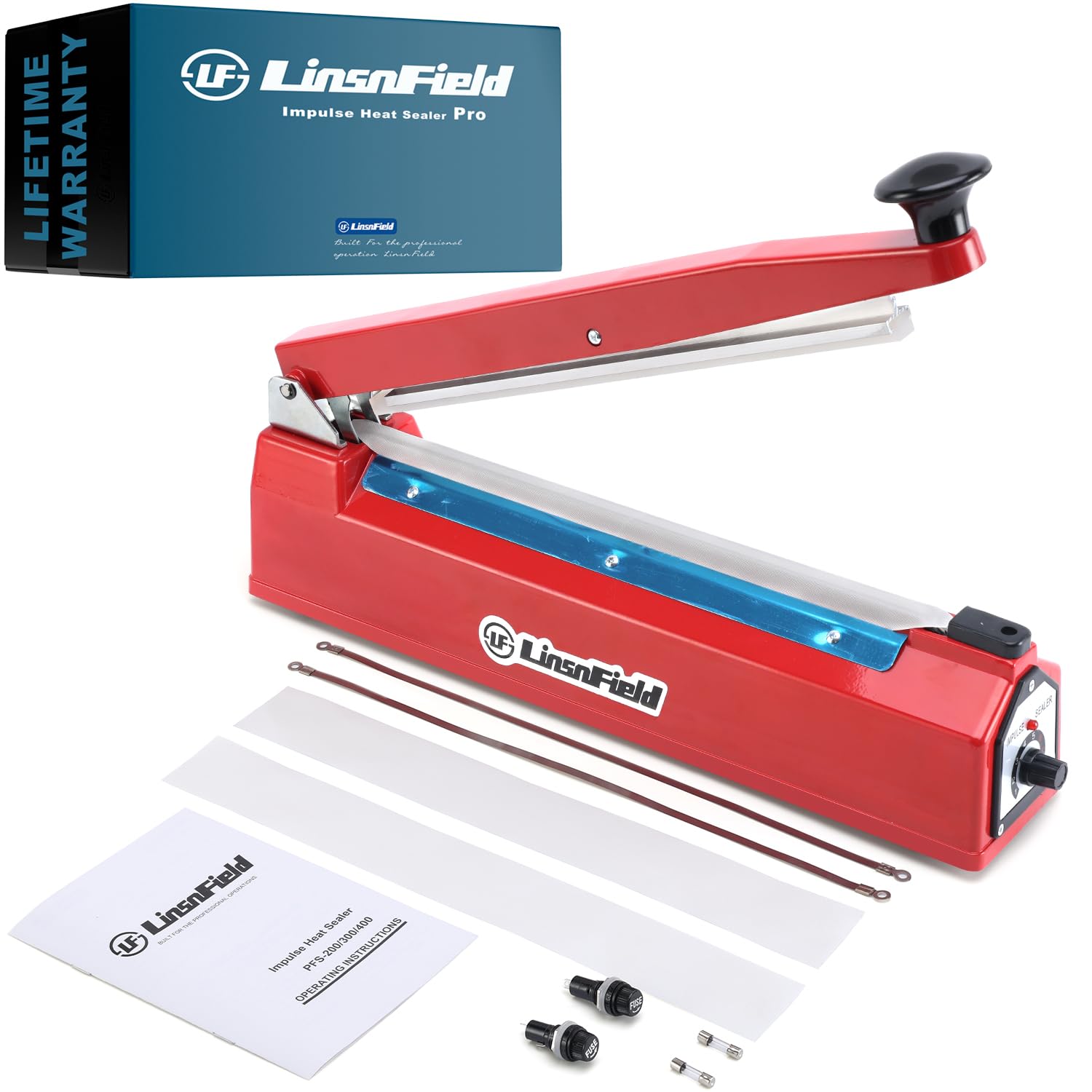
Every other impulse sealer on this page lays down a 2mm seal. The LinsnField Sealer Pro lays down a 7mm one — more than three times as wide — and that single difference decides who should buy it. A wide seal is stronger, more forgiving of a slightly dusty or textured bag mouth, and far better suited to thick Mylar and foil pouches that need to stay sealed for months: coffee, bath salts, food products, and long-term storage packaging. The rest of the machine is built to the same brief. The body is hard-anodised aluminium, which cannot rust the way painted iron eventually can; the transformer is copper, the component LinsnField has manufactured for over twenty years; and a patented overheating-protection system plus a built-in fuse guard against the burnout that kills cheap sealers run back-to-back. It seals the full range of heat-sealable materials — foil, Mylar, cellophane, kraft-lined pouches, chip and snack bags, polyester and nylon films — and the box includes two replacement kits and an extra fuse. The box also promises a lifetime warranty, which tells you how the maker expects it to be used. You pay a clear premium over the standard 12 inch machines, and for thin retail poly bags that premium buys you nothing. For thick pouches and heavy daily volume, the wide seal and the build are the whole point.
Honest pros:
- 7mm seal width — over 3x the standard 2mm, and visibly stronger on thick pouches
- Aluminium body cannot rust; copper transformer and overheat protection for daily runs
- Two replacement kits and a spare fuse included; lifetime warranty on the box
- Seals foil, Mylar, kraft-lined, cellophane, and chip bags, not just plain poly
Honest cons:
- A real price premium over standard 12 inch sealers
- The wide seal is wasted on thin, short-life retail bags — buy for your thickest pouch
- Heavier and more industrial in feel than a seller sealing ten bags a week needs
METRONIC Impulse Sealer 16 inch — the best for wide bags
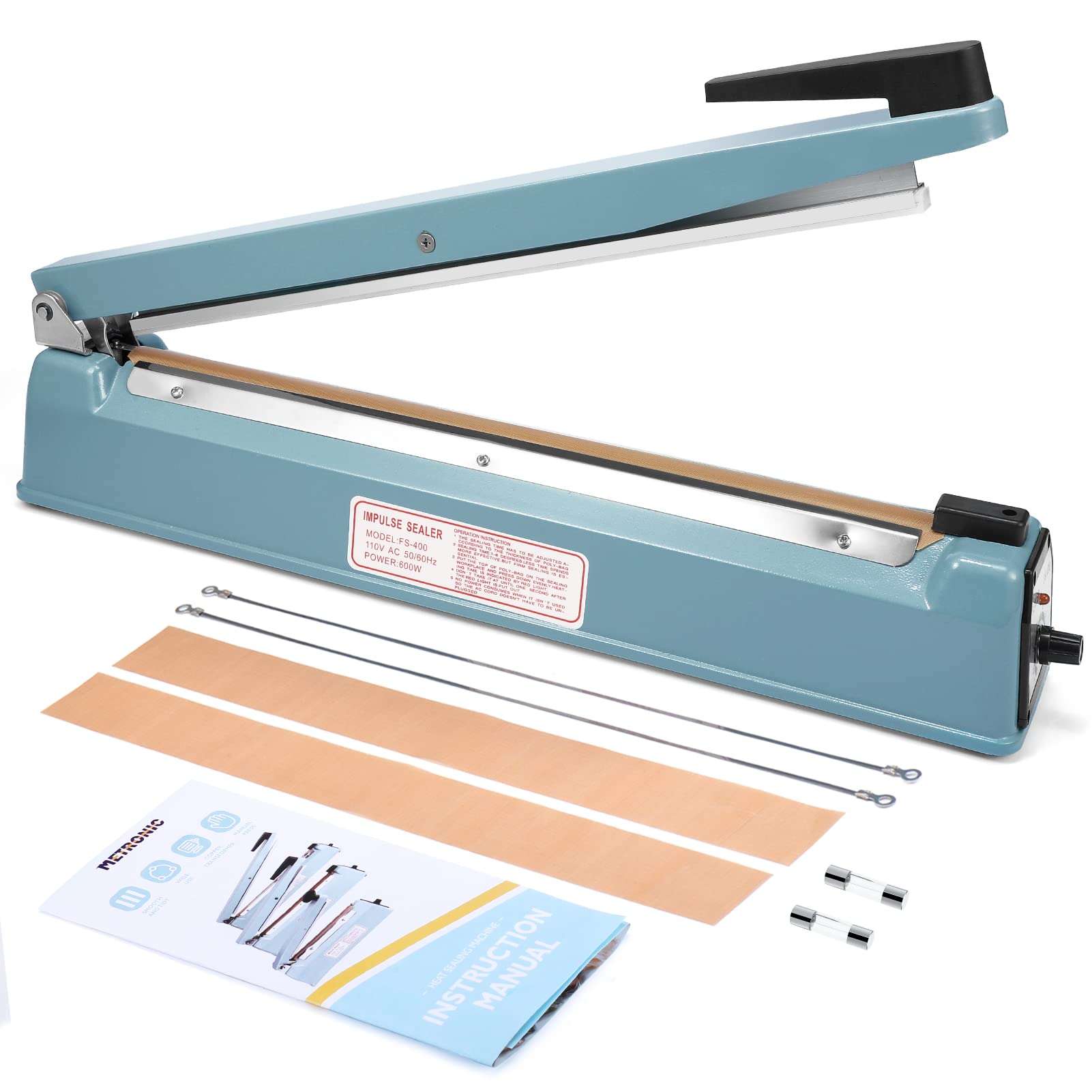
Some packaging simply does not fit an 8 or 12 inch bar: bulk pouches, large Mylar bags, shrink-wrapping a boxed product or a bundle, sealing poly tubing you cut to length yourself. The 16 inch METRONIC (model FS-400) answers with a 16 inch bar and 600W — the most power in the METRONIC line — in the same iron body with the same adjustable dial, 2mm seal, and included repair kit. One press seals the whole width, where a smaller machine forces two overlapping presses with a weak spot in the middle that can peel. It is also the shrink-wrap pick of the three METRONICs: lay the product in centre-fold film or a large shrink bag, and the long bar seals the open sides in single passes before a heat gun shrinks the film tight. The trade-offs are physical. At 16 inches of bar, the machine is long, heavier, and wants a permanent home on the packing bench rather than a cupboard; and the extra width is pure waste if every bag you seal is under 10 inches wide. Measure your widest bag first — if it is over 12 inches, this is your machine; if it is not, the 12 inch buys the same seal for less bench space.
Honest pros:
- 16 inch bar seals wide pouches and bulk bags in one clean press
- 600W — the strongest METRONIC, for thick film and long bars
- The shrink-wrap pick: seals large bags and film around boxed products
- Same repair kit included — spare elements and Teflon strips in the box
Honest cons:
- Long and heavy — it claims permanent bench space
- Oversized for sellers whose bags are all under 10 inches wide
- Still a 2mm seal — width of bar, not width of seal, is what you are paying for
VEVOR FR900K Continuous Band Sealer — the best for high volume
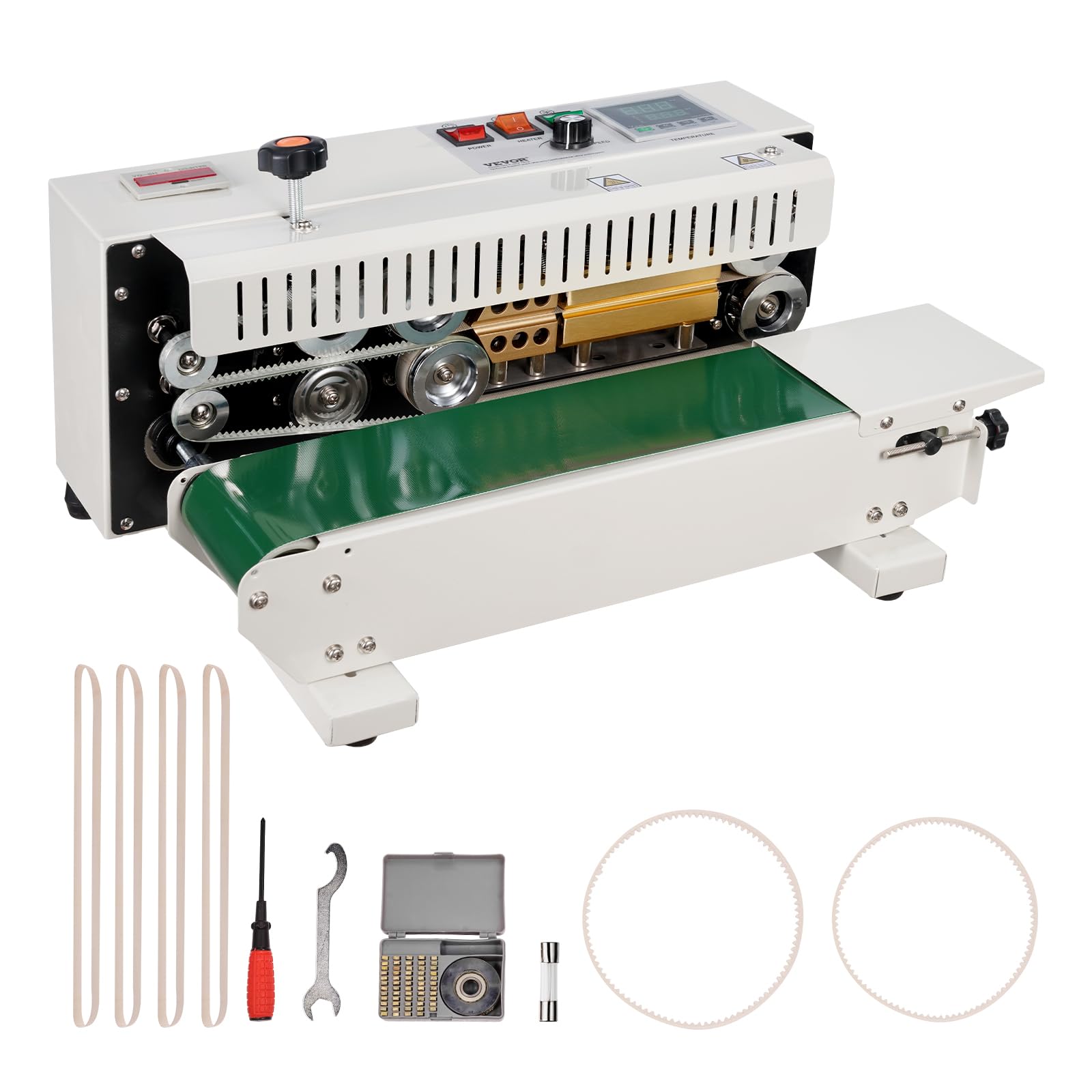
Every machine above works one press at a time. The FR900K does not press at all: you feed the mouth of a filled bag into one side, a conveyor carries it through heated sealing bands, and it comes out the other side sealed — at up to 16 metres of bag per minute, with no pause between bags. Digital temperature control (0–300°C) and an adjustable 6–12mm seal width cover plastic, foil, and compound bags from 0.02 to 0.8mm thick, and the included printing wheel embosses a date or batch code into the seal as it forms — the feature food and bath-and-body sellers need for expiry and lot dates, done in the same pass instead of with a separate stamper. At 600W in a steel body, it is a small production machine, and it asks production-machine things of you: bench space for the conveyor, a warm-up and setup routine instead of impulse sealing's instant start, and a price several times the tabletop sealers. The maths that justifies it is purely about volume and hand fatigue. Sealing fifty bags a day by hand-press is a chore; sealing three hundred is a shift. If your order volume has reached the point where packaging, not making, is what eats your day, this is the step up — and if it has not, every machine above it on this page is the better buy.
Honest pros:
- Continuous sealing at up to 16 m/min — no pressing, no pause between bags
- Prints a date or batch code into the seal in the same pass
- Wide 6–12mm adjustable seal and digital temperature control
- Handles plastic, foil, and compound bags up to 0.8mm thick
Honest cons:
- Costs several times a tabletop impulse sealer — volume has to justify it
- Needs real bench space and a setup routine; no instant first seal
- Complete overkill under roughly a hundred bags a day
Side-by-side
| METRONIC 8 inch | runruii 12 inch | METRONIC 12 inch | LinsnField Sealer Pro 12 inch | METRONIC 16 inch | VEVOR FR900K | |
|---|---|---|---|---|---|---|
| Type | Impulse | Impulse | Impulse | Impulse | Impulse | Continuous band |
| Seal length | 8 inch | 12 inch | 12 inch | 12 inch | 16 inch | Unlimited (fed through) |
| Seal width | 2mm | 2mm | 2mm | 7mm | 2mm | 6–12mm |
| Power | 300W | 350W | 400W | Check listing | 600W | 600W |
| Body | Iron | Lightweight | Iron | Aluminium | Iron | Steel |
| Spares included | Repair kit | Spare element | Repair kit | 2 kits + fuse | Repair kit | Belts + printing kit |
| Typical price | ~$30 | Check current price | Check current price | Check current price | Check current price | Check current price |
| Best for | Starting out | Tight budgets | Most sellers | Thick Mylar & daily runs | Wide bags & shrink wrap | Hundreds of bags a day |
How to choose
Size the bar to your widest bag, not your average one. A bag wider than the bar means two overlapping presses and a weak spot where they meet. Measure the mouth of the widest pouch you seal — including the extra inch you fold or grip — and buy the bar that covers it in one press. Most product pouches land at 12 inches; small items are fine at 8; bulk and shrink work wants 16. If you are still choosing the bags themselves, our poly mailers guide covers the shipping side of packaging, and our packaging supplies guide covers the full unboxing kit a sealer slots into.
Seal width matters more than most listings admit. The standard 2mm seal is plenty for a retail poly bag that a customer opens a week later. It is the weak point on a thick Mylar pouch expected to hold for six months, or a heavy bag that gets shipped and handled. If your product lives in thick or long-life packaging, the LinsnField's 7mm seal or the VEVOR's 6–12mm band is a functional upgrade, not a luxury — and for small high-value items, our jewelry packaging guide covers the pouches and bags that pair with a small sealer.
Dial in on scrap bags first. Every impulse sealer's dial is a timer, not a thermostat: too low peels open, too high melts through and puckers the film. Before a production run, seal three test bags at increasing settings and tug each one hard. The right setting is the lowest one whose seal tears the film before it peels apart. Write the number on the machine for each bag type you use — that one habit removes nearly all sealing failures.
Buy the volume you have, not the volume you hope for. A hand-press impulse sealer comfortably handles a few hundred bags a day in batches, and its wear parts cost a few dollars. The band sealer earns its price and bench space only when pressing itself has become the bottleneck. Start with the impulse machine that fits your bags; upgrade when your hands, not your hopes, tell you to.
FAQ
What bags can an impulse sealer seal?
Any heat-sealable film: PE and PP poly bags, Mylar and foil pouches, cellophane, kraft-lined pouches, and shrink film. It cannot seal paper alone, fabric, or bags with a zip closure above the seal line unless there is sealable film above the zip — which most stand-up pouches have, precisely so they can be heat-sealed shut over the zip.
What is the difference between an impulse sealer and a vacuum sealer?
A vacuum sealer removes air and then seals — it is for food storage. An impulse sealer only seals, which is what product packaging needs: your candle or bath salts do not want vacuum-crushing, and a plain seal is faster, cheaper per bag, and works on bags a vacuum sealer's channel bags cannot match. Some sellers own both, for different jobs.
Why do my seals peel open or melt through?
Peeling means the setting is too low or you lifted the arm before the light went out — the seal needs a second of cooling under pressure after the light cuts off. Melting through means the setting is too high for that film. Change one notch at a time and test on scrap; thin poly often seals at 2–3, thick Mylar at 5–7 on a typical 8-point dial.
How long do heating elements last, and can I replace one?
The element and its Teflon cover strip are wear parts — expect months to a couple of years depending on volume, which is why the picks above mostly include spares. Replacement is a few screws and five minutes, no tools beyond a screwdriver and no service visit. When seals start coming out patchy or one section stops heating, the element or the Teflon strip is almost always the cause.
Do I need a sealer with a cutter?
Only if you seal poly tubing or shrink film you cut to length yourself, where a built-in sliding cutter trims as you seal. If you buy pre-made bags and pouches, a plain sealer is simpler and one less blade to maintain. Sellers who shrink-wrap boxed products often add a separate film dispenser and cutter instead.